Ask an AI assistant to recommend a CRM, a protein bar or a PR agency, and it will name three to five options with confidence. Brands that aren’t named often ask the same question: why them and not us?
No assistant publishes its exact ranking method, and each works a little differently. But the broad mechanics are well understood, and they point to clear actions for communications teams.
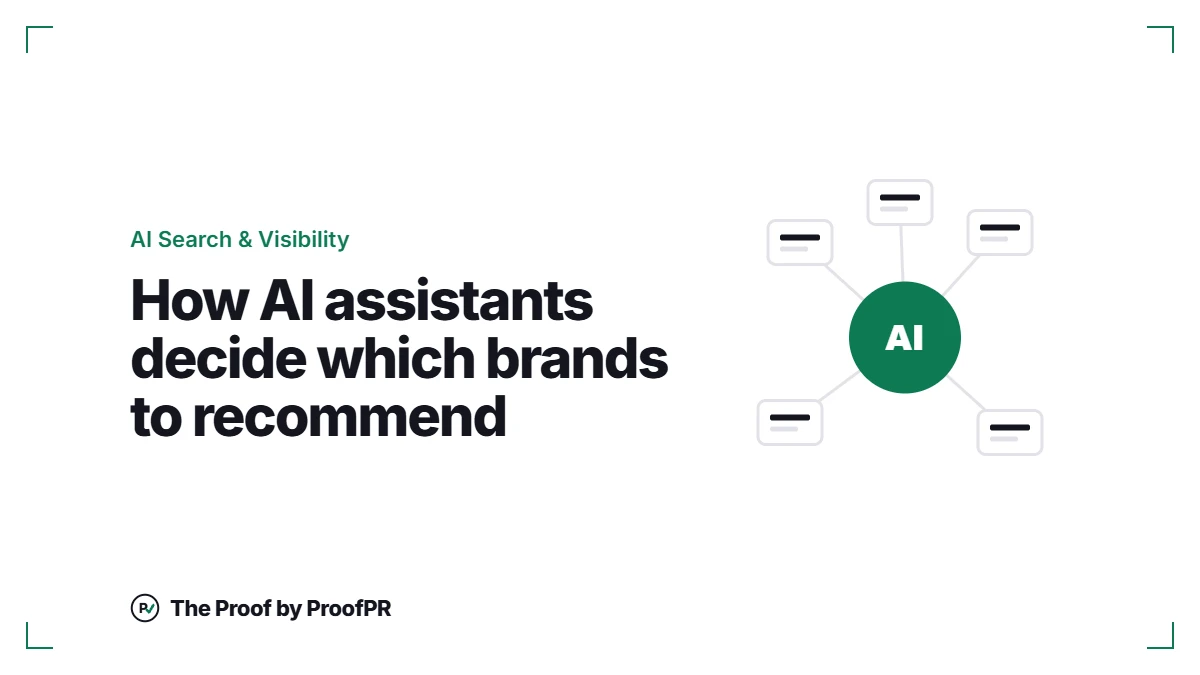
Two ways an assistant knows about you
What it learned in training. Large language models are trained on huge amounts of published text. If your brand was written about often, consistently and by credible sources before the model’s training cut-off, the model is more likely to “know” you and describe you well. If coverage was thin, the model may know little or nothing.
What it finds when it searches. Many assistants now search the web when answering, especially for recent or commercial questions. Perplexity shows its sources for every answer, ChatGPT can search and cite pages, and Google’s AI Overviews draw on pages Google has indexed. Here, the brands named depend on what the search finds and which pages the assistant trusts.
Training explains what AI believes about you. Live search explains what it finds today.
What tends to get a brand named
- Consistent descriptions across sources. When many credible pages describe a brand the same way (“a payroll platform for Indian SMEs”), the assistant can state it with confidence.
- Presence in comparison and “best of” content. Questions like “best X for Y” are often answered from round-ups, buying guides and listicles. If you are absent from those pages, you are often absent from the answer.
- Credible third-party coverage. Established news and trade publications, industry reports and reference pages carry more weight than a brand’s own claims.
- Real user discussion. Forums such as Reddit and Quora, and review sites, frequently appear among the sources assistants cite for product questions.
- Clear, current facts on your own site. Pricing, product names, leadership and locations stated plainly help assistants get the details right.
Key takeaway
Assistants repeat what credible sources agree on. Your job is to make sure those sources say the right things about you.
Why answers differ between assistants
Each assistant uses different models, different training data and different search systems, so the same question can produce different brand lists. One may name you first; another may not mention you at all. That is why measuring only one assistant gives an incomplete picture, and why a proper check covers ChatGPT, Gemini, Claude and Perplexity.
Why answers go out of date
Training data has a cut-off, so a model can describe a brand as it was a year or more ago. In our real snapshot of The Whole Truth, the assistant got the brand’s positioning right but missed its newest product line and its recent funding. When an assistant doesn’t search, recent news simply isn’t part of its answer until it appears widely in the sources it learns from.
What this means for PR teams
- Find the questions your buyers ask AI, and check which brands are named
- Get your brand into the round-ups and comparisons that answer those questions
- Keep key facts consistent across coverage, your website and profiles
- Correct outdated facts with fresh coverage that states them plainly
- Track the same questions every quarter
We set out a step-by-step plan in how to get your brand mentioned in ChatGPT answers. For the basics, start with what AI visibility is.