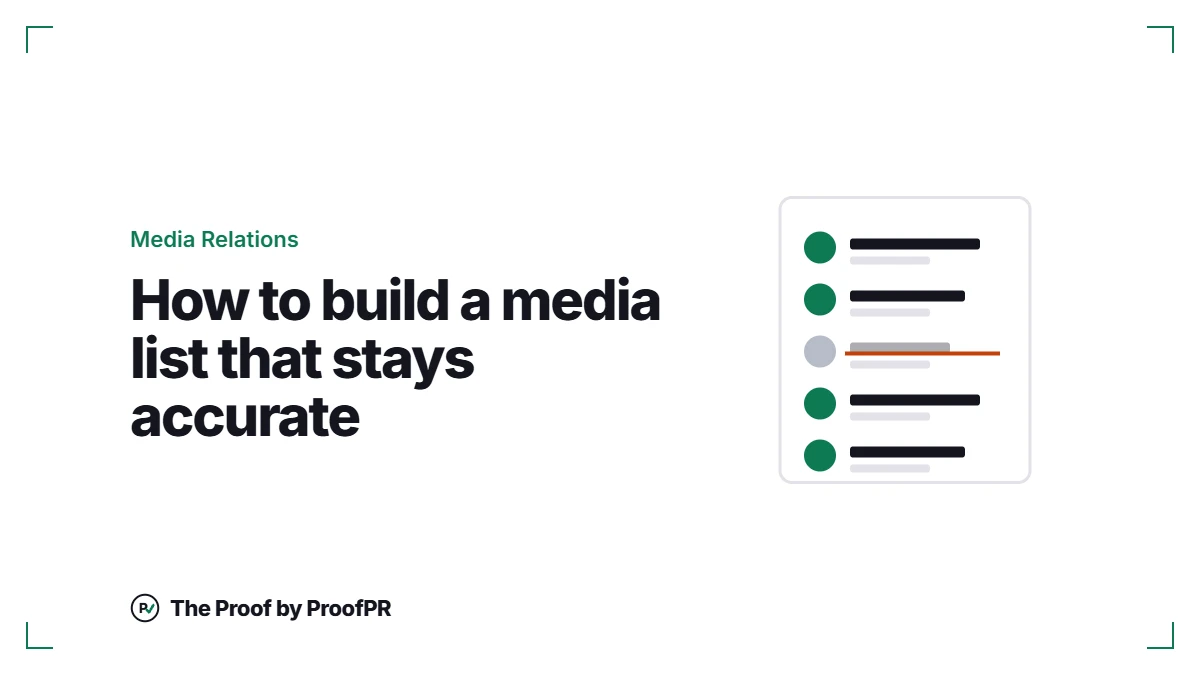
A media list is only as good as its last update. Journalists change beats, move publications and leave the profession, and a list that was accurate in January can send half its pitches to the wrong people by June.
This guide covers how to build a media list properly and a short routine that keeps it useful.
Start from the stories, not a database
Paid databases are a useful starting point, but the best lists are built from recent bylines. Search for the last three months of coverage on your client’s topics and competitors, and note who wrote each story. These are the people actively covering the subject today.
A journalist who covered your competitor last month is your warmest lead.
What to record for each journalist
- Name, publication and current beat
- Date and link of their most recent relevant story
- Preferred contact route (work email, LinkedIn, X), as they list it publicly
- Language, for regional media
- Notes: topics they avoid, deadlines, past interactions with your team
- Tier for each client you work with
Only record contact details journalists have made public for work, and keep the list secure. Treat it as professional information, not something to share or sell.
Organise by story, not just by publication
Group journalists by the stories they cover: funding, consumer trends, workplace, technology, policy. When a new announcement comes up, you can pick the right ten people in minutes rather than mailing the whole list.
Key takeaway
A short, current list beats a long, stale one. Twenty right names outperform two hundred wrong ones.
The 20-minute monthly routine
- Check the latest byline for each tier 1 journalist; update beat or publication if it changed
- Remove anyone with no relevant story in six months, or move them to an “inactive” tab
- Add new names from this month’s coverage of your clients and competitors
- Note which pitches got replies, and from whom
- Add sources AI assistants cite for your clients’ topics (see below)
Add the sources AI relies on
When you check what ChatGPT, Gemini or Perplexity say about your client’s category, note the publications and sites they cite. Those outlets now influence two audiences at once: human readers and AI answers. Add their editors and contributors to your list. We explain why in how AI assistants decide which brands to recommend.
Use the list in your reporting
Your media list and your coverage report should talk to each other. When a story runs, record it against the journalist; at month end, your monthly report can show which relationships produced results. Over time, that shows clients the value of the relationships, not just the clippings.
For the pitch itself, read how to pitch journalists in India.