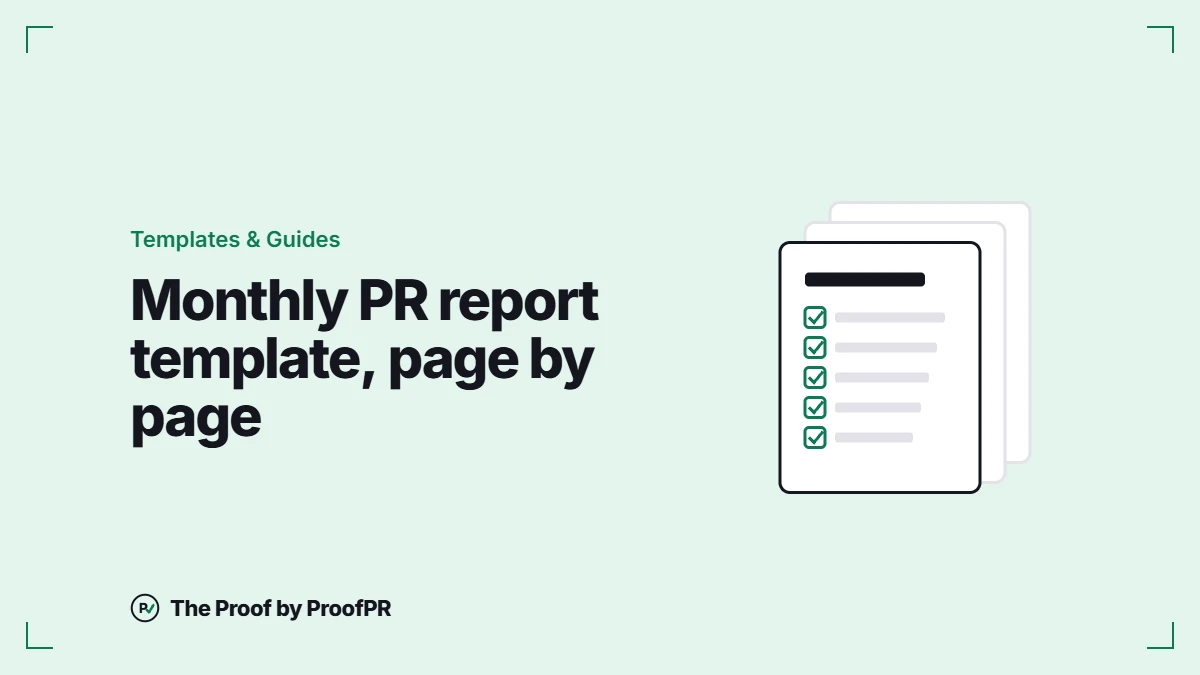
A good monthly PR report template does two jobs. It makes the report quick to build, and it makes the client’s results obvious in the first minute of reading. Most templates only manage the first.
Below is the structure we use, page by page. Copy it into PowerPoint, Google Slides or Keynote and keep your own branding. It assumes a month with somewhere between five and sixty stories.
Page 1: Cover
Client name and logo, the month, and your agency’s name. Keep it to one slide and resist the temptation to add a photo collage of clippings. The cover’s only job is to make the file easy to find later.
Page 2: The month in three lines
This is the slide clients forward. Write it for their boss.
Three short sentences: what ran, where, and what it achieved. Underneath, four numbers at most: total stories, number of publications, tier 1 stories, and one trend number such as share of voice against a named competitor.
Key takeaway
If you only improve one page of your report this month, make it this one.
Page 3: Activities and results
A table with four columns: the activity (announcement, pitch, interview, op-ed, event), the topic, the spokesperson, and the result. The result column is where you name the publications that ran the story. This shows the client the work behind the coverage, including pitches that didn’t land yet.
Page 4: Coverage summary
Break stories down by audience and tier, and split print, online and broadcast if your client cares about the difference. Count original stories and syndicated pickups separately. Clients notice when one wire story becomes “40 pieces of coverage”.
Pages 5 onwards: One story per page
For each story, show:
- Publication, date and medium
- Headline, linked to the article
- Journalist or author
- A one-line summary of what the story said about the client
- Whether the key message came through (yes, partly, no)
- A screenshot or scan, large enough to read
For print, include the edition and page number. For regional language stories, add a one-line English summary so the whole client team can follow.
Last page: What’s next
Two or three things planned for next month, with dates where you have them. This turns the report from a look back into a plan, and it gives the client something to say yes to.
What to leave out
- Advertising value equivalency (AVE): it is not a measure of PR value (see PR metrics that matter)
- Unverified “reach” totals added across publications
- Pages of logos with no context
- Stories that only mention the client in passing, unless you label them as such
How long it should take
With a clear template, the judgement work (summary, activities, what’s next) takes an hour or two. The mechanical work, meaning collecting headlines, dates and screenshots for every story, is what usually eats a whole day.
That second part can be automated. ProofPR’s coverage reports take your list of links and fill this structure in your own template, so your team only checks and adds judgement. For the thinking behind each page, read how to write a PR coverage report clients actually read.